Generative AI in the classroom: threat or opportunity?
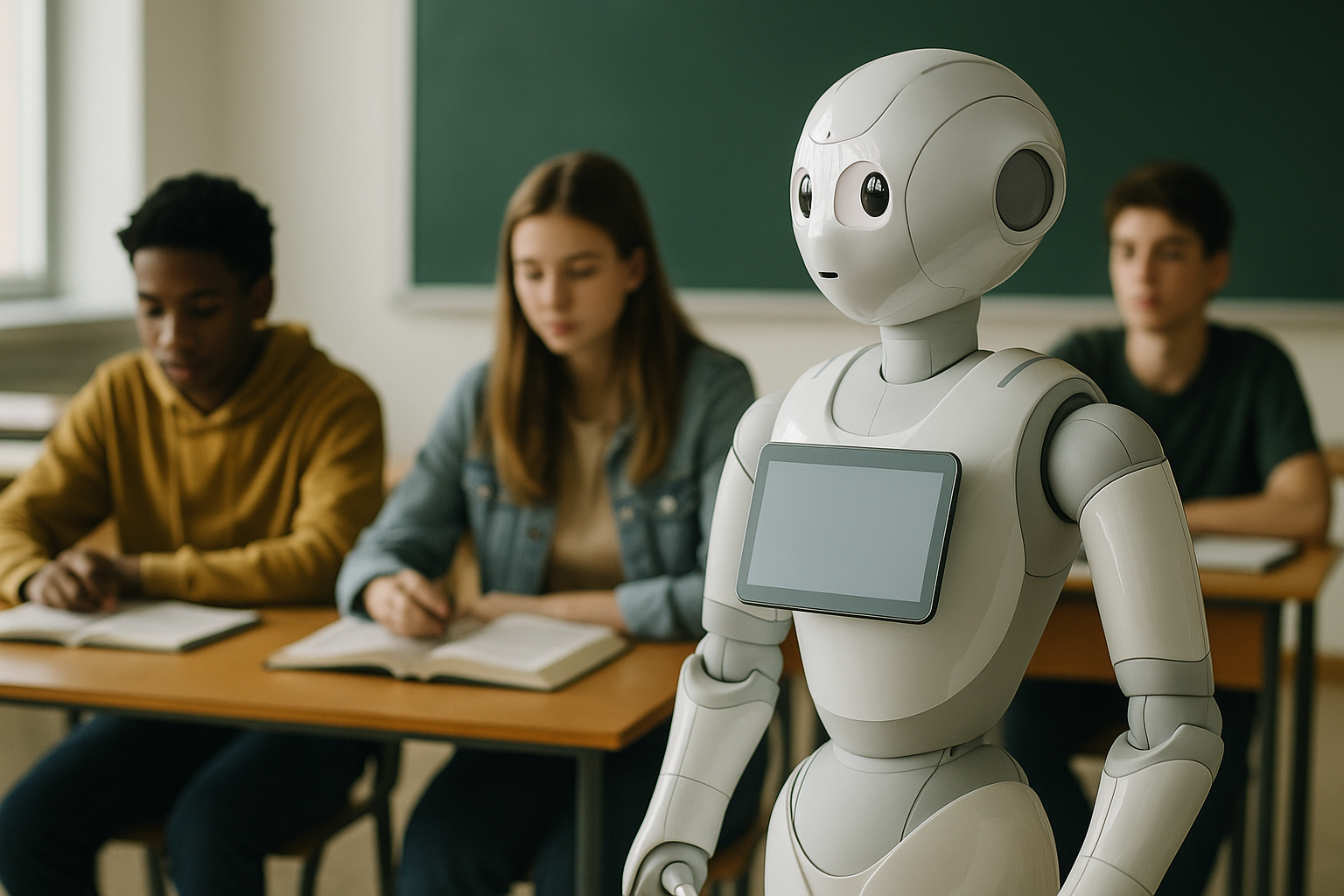
Generative AI is already in the classroom
Generative AI is no longer a distant technological trend. It is already part of students’ daily lives. They use it to ask questions, summarize texts, generate ideas, correct sentences, write code, prepare presentations, and sometimes complete assignments.
For schools and teachers, this creates a real dilemma. Should generative AI be seen as a threat to learning, or as an opportunity to rethink how students learn, write, reason, and demonstrate their understanding?
The real risk is not the tool itself
The main risk is not simply that students have access to AI. The real risk is using AI without guidance, without transparency, and without clear pedagogical expectations.
When AI is used secretly, it can weaken learning. Students may submit work they do not fully understand. Teachers may lose confidence in assessments. Institutions may struggle to define what is acceptable and what is not.
But when AI is framed properly, it can become a powerful support tool. It can help students clarify ideas, receive explanations, compare approaches, and improve drafts. It can also help teachers save time on repetitive tasks while keeping control over the final pedagogical judgment.
Teachers must remain at the center
AI should not replace teachers. It should support them. The teacher remains responsible for defining learning objectives, designing meaningful assessments, interpreting student progress, and making final decisions.
In an educational context, the value of AI depends on how it is integrated. A tool that simply produces answers can encourage shortcuts. A tool that helps students explain, revise, compare, and reflect can strengthen learning.
Assessment must evolve
The arrival of generative AI forces institutions to rethink assessment. Traditional assignments that rely only on final written output are easier to outsource to AI. This does not mean they should disappear, but they need to be supported by clearer expectations and better processes.
Teachers can ask students to document their reasoning, explain their choices, submit drafts, present their process, or reflect on how they used digital tools. In this context, evaluation becomes less about detecting AI and more about understanding the student’s actual learning.
AI literacy is becoming essential
Students need to learn how to use AI responsibly. This includes understanding its limits, checking information, avoiding plagiarism, protecting personal data, and recognizing bias or hallucinations.
Banning AI completely may appear reassuring, but it does not prepare students for the world they are entering. A better approach is to teach appropriate, transparent, and ethical use.
A controlled institutional approach is needed
Schools should not leave each teacher alone to define AI rules from scratch. Institutions need clear policies, shared language, practical examples, and tools that support responsible use.
This is where platforms like Nabunam can help. By providing a structured environment for courses, assessments, AI-assisted correction, and teacher oversight, Nabunam helps institutions integrate AI in a more controlled and pedagogically meaningful way.
Threat or opportunity?
Generative AI can be a threat if it is ignored, hidden, or used without guidance. But it can become an opportunity when it is framed by teachers, supported by institutions, and connected to real learning objectives.
The question is no longer whether AI will enter the classroom. It already has. The real question is whether schools will let it evolve informally, or whether they will build a thoughtful framework around it.
For educators, the opportunity is clear: use AI not to replace learning, but to make learning more explicit, more supported, and more reflective.